Monday, September 13, 2010

Early kingdoms 5th slide


Cataract surgery was known to the physician Sushruta Samhita (6th century BCE).Traditional cataract surgery was performed with a special tool called the Jabamukhi Salaka, a curved needle used to loosen the lens and push the cataract out of the field of vision.The eye would later be soaked with warm butter and then bandaged.Though this method was successful, Susruta cautioned that it should only be used when necessary. Greek philosophers and scientists traveled to India where these surgeries were performed by physicians.The removal of cataract by surgery was also introduced into China from India.

Early kingdoms 4th slide


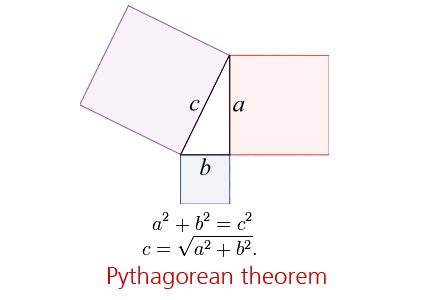
Baudhayana (c. 8th century BCE) composed the Baudhayana Sulba Sutra, which contains examples of simple Pythagorean triples, such as: (3,4,5), (5,12,13), (8,15,17), (7,24,25), and (12,35,37) as well as a statement of the Pythagorean theorem for the sides of a square: "The rope which is stretched across the diagonal of a square produces an area double the size of the original square." It also contains the general statement of the Pythagorean theorem (for the sides of a rectangle): "The rope stretched along the length of the diagonal of a rectangle makes an area which the vertical and horizontal sides make together." Baudhayana gives a formula for the square root of two.

Early kingdoms 3rd slide


Early iron objects found in India can be dated to 1400 BC by employing the method of radio carbon dating. Some scholars believe that by the early 13th century BC iron smelting was practiced on a bigger scale in India, suggesting that the date of the technology's inception may be placed earlier. In Southern India (present day Mysore) iron appeared as early as 11th to 12th centuries BC. These developments were too early for any significant close contact with the northwest of the country.

Early kingdoms 2nd slide


Diverse specimens of swords have been discovered in Fatehgarh, where there are several varieties of hilt. These swords have been variously dated to periods between 1700-1400 BCE, but were probably used more extensively during the opening centuries of the 1st millennium BCE.

Early kingdoms 1st slide


During the 5th century BCE, the scholar Pāṇini had made several discoveries in the fields of phonetics, phonology, and morphology.

Phonetics (from the Greek: φωνή, phōnē, "sound, voice") is a branch of linguistics that comprises the study of the sounds of human speech.

Phonology (from Ancient Greek: φωνή, phōnḗ, "voice, sound" and λόγος, lógos, "word, speech, subject of discussion") is the systematic use of sound to encode meaning in any spoken human language, or the field of linguistics studying this use.

In linguistics, morphology is the identification, analysis and description of the structure of morphemes and other units of meaning in a language like words, affixes, and parts of speech and intonation/stress

Post Maha Janapadas—High Middle Ages 5th slide


During the 1st millennium BCE, the Vaisheshika school of atomism was founded. The most important proponent of this school was Kanada, an Indian philosopher who lived around 200 BCE. The school proposed that atoms are indivisible and eternal, can neither be created nor destroyed, and that each one possesses its own distinct viśeṣa (individuality). It was further elaborated on by the buddhist school of atomism, of which the philosophers Dharmakirti and Dignāga in the 7th century CE were the most important proponents. They considered atoms to be point-sized, durationless, and made of energy.

Post Maha Janapadas—High Middle Ages 4th slide


The cashmere wool fiber, also known as pashm or pashmina, was used in the handmade shawls of Kashmir. The woolen shawls from Kashmir region find written mention between 3rd century BC and the 11th century CE

Post Maha Janapadas—High Middle Ages 3rd slide


Indigo was used as a dye in India, which was also a major center for its production and processing.The Indigofera tinctoria variety of Indigo was domesticated in India. Indigo, used as a dye, made its way to the Greeks and the Romans via various trade routes, and was valued as a luxury product.

Post Maha Janapadas—High Middle Ages 2nd slide


The Arthashastra of Kautilya mentions the construction of dams and bridges. The use of suspension bridges using plaited bamboo and iron chain was visible by about the 4th century.The stupa, the precursor of the pagoda and torii, was constructed by the 3rd century BCE.Rock-cut step wells in the region date from 200-400 CE.[Subsequently, the construction of wells at Dhank (550-625 CE) and stepped ponds at Bhinmal (850-950 CE) took place.

Post Maha Janapadas—High Middle Ages 1st slide


Crystallized sugar was discovered by the time of the Gupta dynasty,[82] and the earliest reference to candied sugar comes from India.[83]